Scrolling Through the Diaspora: Arab-American Creators Are Taking Over Your Feed
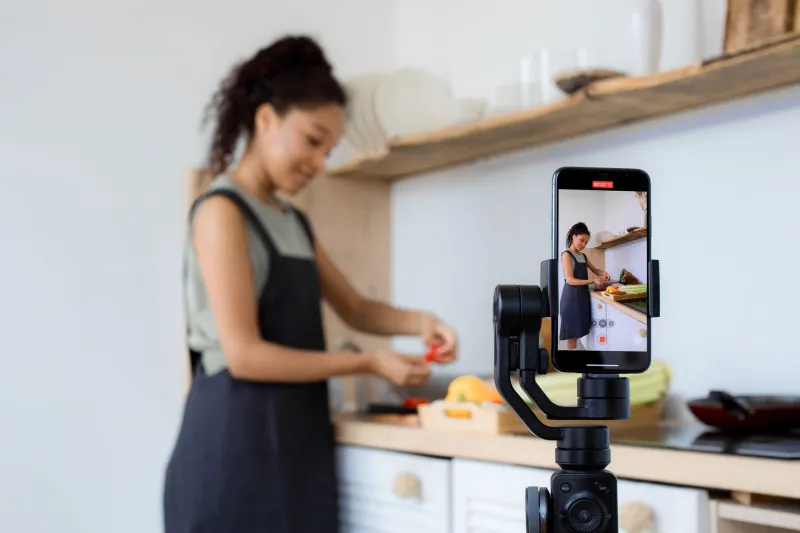
Somewhere between a viral TikTok about being mistaken for every ethnicity except your own and a YouTube vlog shot in a Lebanese American household in Dearborn, Michigan, something genuinely new is happening. Arab-American content creators — armed with smartphones, ring lights, and an endless supply of cultural material — are carving out digital spaces that feel nothing like anything mainstream media has ever offered their communities.
And millions of people are watching.
The Algorithm Doesn't Care About Your Accent
For decades, the path to visibility for Arab Americans in entertainment ran through a very narrow gate. You either got cast as a terrorist, a cab driver, or — if you were lucky — a quirky best friend with an exotic background. The gatekeepers were real, the stereotypes were exhausting, and the message was pretty clear: your story isn't the one we're trying to tell.
TikTok and YouTube changed the math entirely. On these platforms, relatability and authenticity do the heavy lifting that connections and casting agents used to do. A first-generation Palestinian American woman doing a cooking video where she learns her teta's recipe for maqlooba while narrating the whole thing in a mix of Arabic and English? That's not a niche product. That's a hit.
Creators like Noor Stars, who built her following across the Arab world before crossing over to English-language content, or comedians like Mo Amer — who started grinding on social media long before his Netflix special — represent just the visible tip of a very large iceberg. Below the surface, hundreds of smaller creators are doing the daily work of showing American audiences what Arab life actually looks like from the inside.
What's Actually Resonating — And Why
Talk to any Arab-American creator about what makes their content click, and a few themes come up again and again. Food is always near the top of the list. There's something almost universally magnetic about watching someone make shawarma from scratch, or listening to a creator explain why their mom's version of kibbeh is the only version that matters. Food content travels — it crosses language barriers, it makes people hungry, and it humanizes cultures that have historically been flattened into headlines.
Humor is the other heavy hitter. The comedy of being caught between two worlds — navigating a Ramadan iftar while your coworkers are confused about why you're not eating lunch, or explaining to your American friends why you can't just "skip" Eid — hits differently when it comes from inside the experience. It's not self-deprecating in the way that older, more assimilationist humor sometimes was. It's confident. It's specific. And it's finding audiences well beyond the diaspora.
Content creator and Michigan native Rami Nashashibi, who documents everyday Arab-American life to his growing YouTube audience, put it simply in a recent interview: "I'm not trying to explain myself to anyone. I'm just living, and people are finding it interesting. That's kind of wild to me, but also — yeah, it makes sense. People are hungry for real."
Diaspora First, Mainstream Second
What's particularly striking about this wave of creators is how deliberately many of them are centering the diaspora audience before worrying about broader appeal. That's a strategic inversion of how representation usually works. Traditionally, the logic went: make something palatable enough for mainstream audiences, and maybe your own community will get something out of it too.
These creators are flipping that. They're making content for Arab Americans, for people who grew up code-switching between Arabic and English at the dinner table, for people who know what it feels like to have your lunch look "weird" to your classmates. And paradoxically, that specificity is exactly what's making them blow up.
There's a well-documented phenomenon in digital content where hyper-specific communities attract curious outsiders. When you're genuinely authentic to your experience, people who've never shared that experience get fascinated by it. The specificity becomes the draw.
The Platforms Are Imperfect — But They're What We've Got
None of this is without complications. Arab-American creators have been vocal about algorithmic bias, with some reporting that content that mentions Arabic words, references to certain countries, or even the word "Palestine" gets flagged, suppressed, or demonetized. The platforms' content moderation systems — built largely without input from Middle Eastern communities — have created real friction for creators trying to tell their stories honestly.
There's also the question of sustainability. Building a following is one thing; turning that into a livable income is another. Brand deals and sponsorships are still largely chasing mainstream demographics, which means Arab-American creators often have to work harder for partnerships that feel culturally relevant rather than tokenizing.
But creators are adapting. Many are building diversified revenue streams through Patreon, merchandise, live events, and community memberships. Some are collaborating with Arab-owned businesses and brands that actually want to reach their specific audience. It's scrappier than what established influencers in other spaces enjoy, but the community-building happening alongside the content creation is, if anything, more durable.
More Than Representation — It's Documentation
There's a bigger picture here that's easy to miss if you're just looking at view counts. What Arab-American creators are doing on TikTok and YouTube isn't just entertainment. It's documentation. It's a living archive of what it actually meant to grow up Arab in America in the 2020s — the humor, the food, the language, the family dynamics, the political complexity, the joy.
Traditional media has almost never captured this. Films and TV shows have occasionally gotten close, but the editorial filters, the production timelines, and the commercial pressures have always shaped the final product into something more digestible, more palatable, more generic. Social media, for all its chaos and imperfection, doesn't have those same filters.
What you get instead is something raw and specific and alive. A creator filming her mom yelling at the TV during a soccer match. A guy explaining why his dad's idea of "a quick errand" always takes three hours. A teenager in a hijab lip-syncing to a Fairuz song in her bedroom. These aren't polished narratives designed to make Arab culture legible to outsiders. They're just life — and that's exactly why they matter.
The rise of Arab-American creators isn't a trend to be tracked and monetized. It's a community finding its own voice, on its own terms, one video at a time. And if you haven't found your way to that corner of the internet yet, trust us — you're missing something good.