The Unseen Architects: How Arab and Middle Eastern Creatives Are Quietly Reshaping American Cities
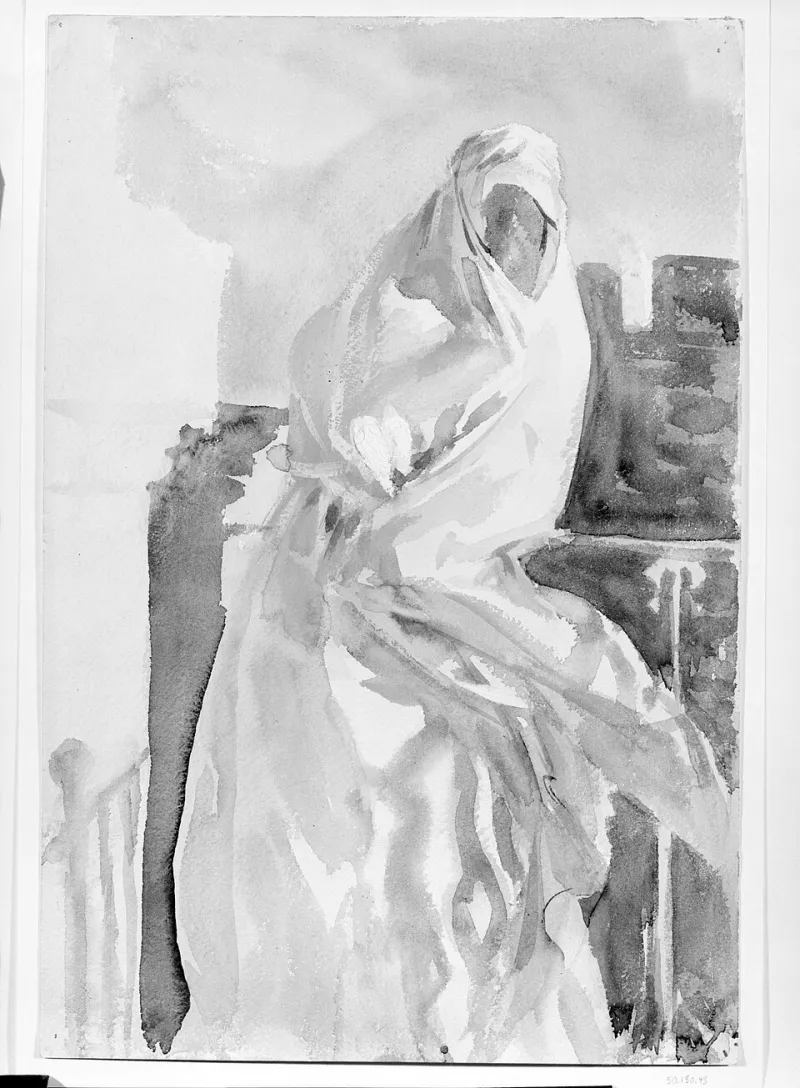
Photo: John Singer Sargent, CC0, via Wikimedia Commons
The building that won the AIA award sits on a corner in Detroit's Midtown neighborhood, its facade a tessellated mashrabiya-inspired screen that filters afternoon light into the lobby in shifting geometric patterns. The architect who designed it, Rami Aziz, grew up in Dearborn — the son of Lebanese immigrants — and spent years feeling like his cultural reference points were a liability in architecture school. "Nobody was asking for Islamic geometric patterns in studio critiques," he says dryly. "Now the same aesthetic is in every design magazine."
Aziz is one of a generation of Arab and Middle Eastern American professionals whose influence on American visual culture, urban space, and innovation is significant, growing, and almost entirely underreported. While the entertainment industry's relationship with Arab representation gets (rightfully) scrutinized, the quieter revolution happening in architecture studios, fashion ateliers, and tech incubators rarely makes the same headlines.
That's the story we're here to tell.
Building With Memory: Arab American Architects and the Urban Landscape
American architecture has long absorbed influences from around the world — but the specific contributions of Arab and Middle Eastern designers often get absorbed without attribution, their cultural origins flattened into generic "global" or "international" style.
Rami Aziz pushes back on that framing. His firm, Bayt Studio (bayt means "home" in Arabic), explicitly incorporates principles drawn from traditional Arab domestic architecture — the courtyard as organizing principle, the layering of public and private space, the use of geometric ornamentation that serves both aesthetic and structural functions. "These aren't decorative choices," he explains. "The mashrabiya screen is a climate response. The courtyard is a social technology. This stuff was engineered over centuries for specific human needs. It translates."
His projects in Detroit and Cleveland have been praised for their community integration and climate responsiveness — qualities that, Aziz notes, were baked into the cultural tradition long before they became buzzwords in sustainable design circles.
He's not alone. Across the country, a cohort of Arab American architects and urban planners are working on projects that range from affordable housing in Chicago's South Side to mixed-use transit corridors in Houston — often in communities with significant Arab and Muslim populations, and often with a sensitivity to how built space shapes cultural life that comes directly from their own backgrounds.
Threads of the Desert: Middle Eastern Fashion Designers Finding Their American Voice
The American fashion industry has a complicated relationship with Middle Eastern aesthetics — simultaneously fascinated by the visual vocabulary of the region and historically reluctant to credit the humans behind it. That dynamic is shifting, partly because a new generation of Arab American designers is operating with considerably less patience for it.
Take Lina Barakat, a Palestinian American fashion designer based in Los Angeles whose label, Kufr, launched in 2021 and has since been worn by a growing list of celebrities who, notably, are often photographed in pieces they can't immediately explain the cultural context of. Barakat's work draws on Palestinian embroidery traditions — tatreez — translating the intricate cross-stitch patterns of her grandmother's thobe into contemporary silhouettes that work in both a gallery opening and a family gathering.
"I'm not making costumes," she says firmly. "I'm making clothes for women who live in the present and carry their history with them. That's not a niche. That's just fashion."
Her pieces retail between $200 and $800, occupy a mid-luxury price point, and sell out consistently. The brand's Instagram following skews heavily toward Arab American women in their 20s and 30s — but also toward non-Arab customers drawn to the craftsmanship and the visual specificity of the work. "People are tired of generic," Barakat says. "They want things that come from somewhere."
Elsewhere in the fashion ecosystem, Lebanese American stylist and creative director Samer Khoury has quietly shaped the visual identity of several major American brands and recording artists without his name ever appearing in the press coverage of those projects. "The Middle Eastern creative in America is often the person making the thing look great and not getting the byline," he says with a shrug that suggests he's made a certain peace with it, even if he shouldn't have to.
Silicon Wadi Comes West: Arab American Innovators in Tech
Israel gets a lot of attention for its tech ecosystem — "Silicon Wadi" is a well-worn media shorthand. The Arab American contribution to US technology and innovation is less mythologized, but no less real.
In cities like Detroit, Dearborn, Houston, and the Bay Area, Arab American entrepreneurs are building companies that range from fintech platforms serving underbanked immigrant communities to AI-driven logistics startups and climate tech ventures. The Arab American Institute estimates that Arab Americans contribute hundreds of billions of dollars annually to the US economy, with entrepreneurship rates consistently above the national average.
Yasir Nasser, a Yemeni American engineer turned founder who launched a supply chain optimization startup in the Bay Area, says the cultural background is a genuine professional asset — not just a personal identity. "Arab business culture is relationship-first. You build trust before you build transactions. That's actually really valuable in enterprise sales, in partnerships, in hiring. It's not something I learned in an MBA program."
His company, Mujamma (Arabic for "gathering place" or "complex"), closed a Series A round last year and is expanding operations in three US cities.
The Credit Gap
What connects Rami Aziz in his Detroit architecture studio, Lina Barakat at her LA atelier, and Yasir Nasser pitching investors in San Francisco is not just cultural background — it's a shared experience of operating in American professional spaces where that background is either invisible or exoticized, rarely simply acknowledged.
"I've had clients tell me my design 'feels very exotic' and mean it as a compliment," Aziz says. "I want to say: it feels like Detroit. It feels like my grandmother's house in Beirut. It feels like good architecture. 'Exotic' is doing a lot of work in that sentence that I'm not sure I want it to do."
The gap between influence and attribution is real, and it matters — not just as a justice issue (though it is that), but because accurate cultural credit is how traditions stay alive and communities receive the recognition that sustains them.
The good news is that the next generation of Arab and Middle Eastern American professionals seems less inclined to let that credit gap slide. They're naming their references, building their own platforms, and making sure the story gets told — even when the mainstream press isn't paying attention.
We're paying attention.