Screens That Actually Look Like Us: The New Golden Age of Middle Eastern Television
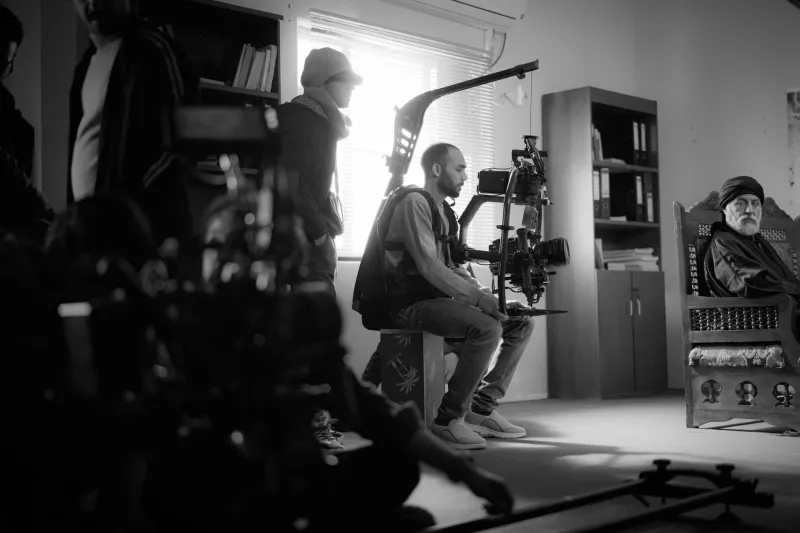
For a long time, if you wanted to see a Middle Eastern character on American TV, you pretty much knew what you were going to get. The terrorist. The belly dancer. The oil sheikh with a mysterious accent. The trauma survivor with exactly one emotional setting. Diaspora audiences learned to brace themselves — or just stop watching altogether.
But something has shifted. Quietly at first, and now all at once, a new generation of Middle Eastern storytellers is flooding streaming platforms with shows that are messy, funny, heartbreaking, and — most importantly — real. And audiences, both in the region and across the US, are absolutely eating it up.
The Shows Changing the Conversation
You can't talk about this moment without mentioning Paranormal, the Egyptian Netflix series based on Ahmed Khaled Tawfik's beloved horror novels. It wasn't just a hit — it was a statement. Here was a show rooted in Egyptian literary culture, shot with cinematic ambition, and streamed globally without being sanitized for a Western gaze. Egyptian viewers didn't have to explain the jokes. The cultural references landed because they were supposed to land.
Then there's Jinn, Netflix's first Arabic-language original, set in Jordan. Was it perfect? Critics debated that endlessly. But the very existence of a Jordanian teen supernatural drama — with all its awkward coming-of-age energy — felt like a door swinging open. Suddenly the question wasn't "will Western audiences accept this?" It was "what do we want to make?"
Saudi Arabia's entertainment explosion post-2017 has also produced genuinely surprising work. Takki, a youth comedy series, leaned into Gulf millennial humor in ways that felt authentic rather than performed. Meanwhile, Lebanese productions have long maintained a sophisticated tradition — shows like Hayda Habibi have been blending sharp social commentary with family drama for years, even as the country itself navigated unthinkable crises.
Streaming Platforms Are Finally Putting Their Money Down
Netflix has made the loudest moves, investing heavily in Arabic-language originals and acquiring regional content for global distribution. But they're not the only game in town. OSN+ and Shahid — the latter being MBC Group's streaming platform — have been quietly building impressive libraries that cater specifically to Arab audiences rather than trying to crossover at the expense of authenticity.
Shahed in particular has become a go-to for diaspora viewers in the US who want to keep up with Ramadan programming without hunting down sketchy streaming links. The platform's investment in original content has grown significantly, and the quality shows it.
Amazon Prime Video has also stepped into the space, picking up regional productions and giving them broader visibility. For writers and producers in the region, this means actual budgets, actual distribution, and — crucially — actual creative leverage.
The Creators Driving the Shift
The people making these shows are often the same people who grew up frustrated by their absence. Egyptian writer and director Mariam Naoum, whose work spans both film and television, has spoken publicly about the responsibility she feels to portray Egyptian women with full inner lives — not as symbols or victims, but as full human beings navigating complicated realities.
Similarly, Lebanese-American creators working on both sides of the Atlantic are bringing a dual perspective that's proving incredibly valuable. They understand what a diaspora audience needs — that specific hunger for recognition — while also having the cultural fluency to keep the storytelling honest.
Producers across the Gulf have noted a generational shift in writers' rooms too. Younger writers who grew up on a mix of Friends, Arabic soap operas, and Twitter are creating hybrid sensibilities that don't fit neatly into old categories. That's not a problem. That's the whole point.
Diaspora Audiences Are Done Being Passive
Here in the US, Arab-American and broader Middle Eastern diaspora communities have become vocal, organized viewers. They're not just watching — they're tweeting, reviewing, and holding creators accountable in real time. When a show gets something wrong, they say so. When it gets something right, they champion it hard.
This audience pressure has actually improved things. Producers know that a show airing on a global platform will be scrutinized by people who know — who will catch the lazy clichés, the off-brand dialect choices, the costumes that feel like a costume rather than a wardrobe. That scrutiny, uncomfortable as it sometimes is, raises the floor.
There's also something deeply personal happening. For many second and third-generation Arab-Americans, watching a show set in their parents' home city — hearing the dialect, recognizing the food on the table, getting the humor without needing subtitles to explain the subtext — is an emotional experience that's hard to describe if you've never been denied it.
What Comes Next
The momentum is real, but it's not guaranteed to last. The streaming wars have made platforms more cautious about spending, and "diverse content" can become a checkbox exercise if audiences and creators aren't paying attention. The risk of the industry patting itself on the back too early is very much present.
But the talent is there. The appetite is there. And — maybe most importantly — the audience is there, ready, and has been waiting for a long time.
Middle Eastern television isn't just getting better. It's getting brave. And for those of us who spent years cringing at what passed for representation, that's not a small thing. That's everything.